
Sustainable Design
Sustainable and eco-friendly office design using responsible materials and energy-efficient solutions.
Sustainable Office Design
Sustainability is no longer optional in commercial interior design. It is an expectation from employees, clients, investors, and regulators alike. At District Four Design, sustainable office design is woven into every project we deliver – not as an afterthought or an upgrade, but as a fundamental part of how we work.
A green office design approach does not mean compromising on aesthetics, functionality, or budget. Done well, eco-friendly office design creates spaces that are healthier for the people who use them, kinder to the environment, and more cost-effective to operate over their lifetime.
Why Sustainable Office Design Matters
The Environmental Reality
The built environment accounts for approximately 40% of the UK’s total carbon emissions. Commercial interiors play a significant role in that figure – from the energy consumed by lighting and HVAC systems to the embodied carbon in the materials used during fit-out.
The Business Case
Beyond the environmental imperative, there is a strong commercial argument for sustainable office design. Companies with green credentials attract and retain better talent, particularly among younger workers who increasingly factor environmental responsibility into their career decisions.
Sustainable buildings also command higher rental values and lower operating costs, making them a smarter long-term investment.
The Wellbeing Dividend
Research by the World Green Building Council found that employees in green-certified buildings report 26% higher cognitive function and 30% fewer sick days. When your office supports wellbeing, productivity follows.
Our Approach to Sustainability
We take a practical, evidence-based approach to eco-friendly office design. We do not chase certifications for their own sake or specify expensive materials purely because they carry a green label. Instead, we focus on the decisions that deliver the greatest environmental benefit relative to their cost.
Responsible Material Selection
The materials we specify are one of the most impactful sustainability decisions in any fit-out project. We prioritise:
- Materials with high recycled content and low embodied carbon
- FSC-certified timber and sustainably sourced natural materials
- Low-VOC (volatile organic compound) paints, adhesives, and finishes that improve indoor air quality
- Durable materials that will last the full lifecycle of the fit-out, reducing the need for premature replacement
- Locally manufactured products where possible, reducing transport emissions
We maintain close relationships with suppliers who share our commitment to sustainability and can provide transparent data on the environmental credentials of their products.
Energy Efficiency
Operational energy consumption is a significant ongoing cost and carbon source for any commercial building. Our designs prioritise energy efficiency through:
- LED lighting throughout, with daylight harvesting and occupancy sensors to minimise waste
- Efficient HVAC zoning that matches heating and cooling output to actual occupancy patterns
- Natural ventilation strategies where building design permits
- Smart building controls that learn usage patterns and optimise energy consumption automatically
- Thoughtful layout design that maximises the penetration of natural light, reducing artificial lighting demand
These measures reduce operational costs from day one and deliver compounding savings over the life of the fit-out.
Biophilic Design
Biophilic design is the practice of incorporating natural elements into the built environment. It is one of the most effective strategies for improving both sustainability and wellbeing in the workplace. We integrate biophilic elements throughout our projects, including:
- Living green walls and indoor planting schemes that improve air quality and acoustic comfort
- Natural materials such as timber, stone, and wool that create a warmer, more tactile environment
- Maximised views to the outdoors and connection to natural light cycles
- Water features and natural textures that reduce stress and create a sense of calm
- Colour palettes inspired by the natural world
The evidence is strong. Studies show that biophilic design can reduce stress by up to 37%, increase creativity by 15%, and improve overall wellbeing by 13%. These are not marginal gains – they represent a real return on investment in your people’s productivity and health.
BREEAM and Environmental Certifications
BREEAM (Building Research Establishment Environmental Assessment Method) is the world’s leading sustainability assessment method for buildings and fit-outs. A BREEAM certification provides independent, third-party verification that a project meets rigorous environmental standards.
District Four Design has experience delivering projects to BREEAM standards. We can guide you through the certification process, advise on which credits are achievable and cost-effective for your specific project, and ensure that sustainability targets are met without unnecessary expense.
Even where formal certification is not required, we use BREEAM principles as a framework for making better design decisions. The methodology provides a structured approach to assessing environmental impact across categories including energy, water, materials, waste, health and wellbeing, and pollution.
One team from start to finish
No subcontractor roulette. No finger-pointing. We handle design, construction and furniture under one roof, giving you a single point of contact from first call to final handover.
Discuss Your Project →Circular Economy in Fit-Out
Moving Beyond the Linear Model
The traditional fit-out model is linear: buy materials, install them, strip them out at end of lease, and send them to landfill. This approach is wasteful, expensive, and increasingly unacceptable.
We advocate a circular economy approach to commercial interiors. This means designing for disassembly so that components can be reused or recycled at end of life. It means specifying furniture systems that can be refurbished and reconfigured rather than replaced. And it means working with waste management partners who can divert fit-out waste from landfill.
Practical Circular Strategies
Circular economy strategies we employ include:
- Auditing existing furniture and fixtures to identify items that can be retained, refurbished, or repurposed
- Specifying modular furniture systems designed for long-term flexibility and component replacement
- Using demountable partition systems instead of permanent drylining where appropriate
- Selecting materials with take-back schemes offered by manufacturers
- Setting and monitoring waste diversion targets for every project
Reducing Your Carbon Footprint
Every fit-out project has a carbon footprint – both in its construction (embodied carbon) and in its ongoing operation (operational carbon). We help our clients understand and reduce both.
On the embodied carbon side, we can carry out carbon assessments of material choices, comparing options and identifying lower-carbon alternatives. On the operational side, we design spaces that are inherently efficient, reducing energy, water, and waste from the outset.
For businesses with net-zero targets or carbon reporting obligations, we provide the data and documentation needed to demonstrate the environmental performance of your fit-out.
Wellbeing and Sustainability – Two Sides of the Same Coin
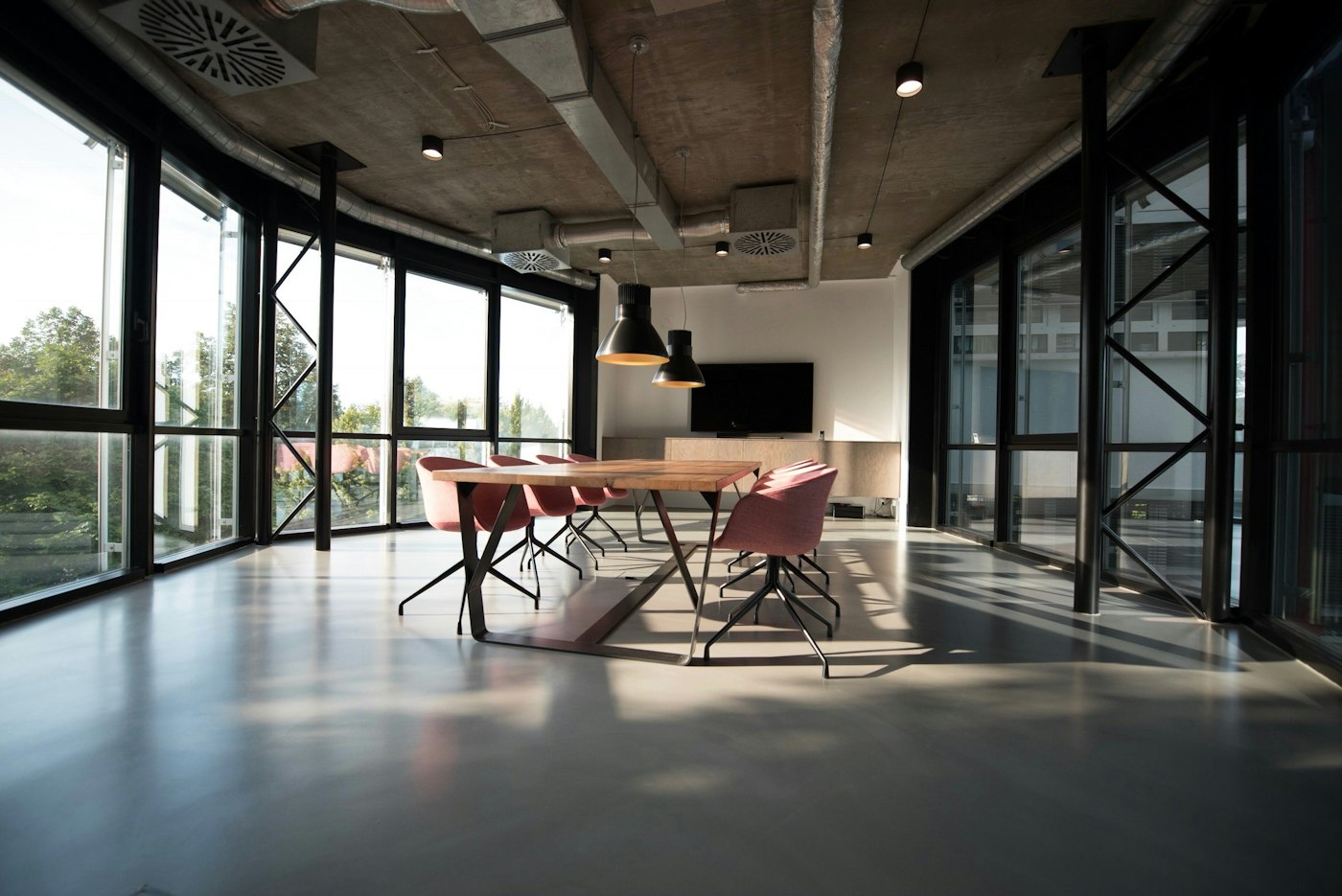
Sustainable office design and workplace wellbeing are not separate agendas. They reinforce each other. Better air quality, more natural light, access to greenery, and lower noise levels are good for the planet and good for your people.
When we design sustainably, we create healthier, more productive workplaces as a natural consequence. This is why we see sustainability not as a constraint but as an opportunity – a chance to create spaces that are better for the environment, better for your people, and better for your business.
If you are planning a fit-out and want to ensure it reflects your environmental commitments without compromising on design quality, we would love to talk. Get in touch to discuss how sustainable office design can work for your business.